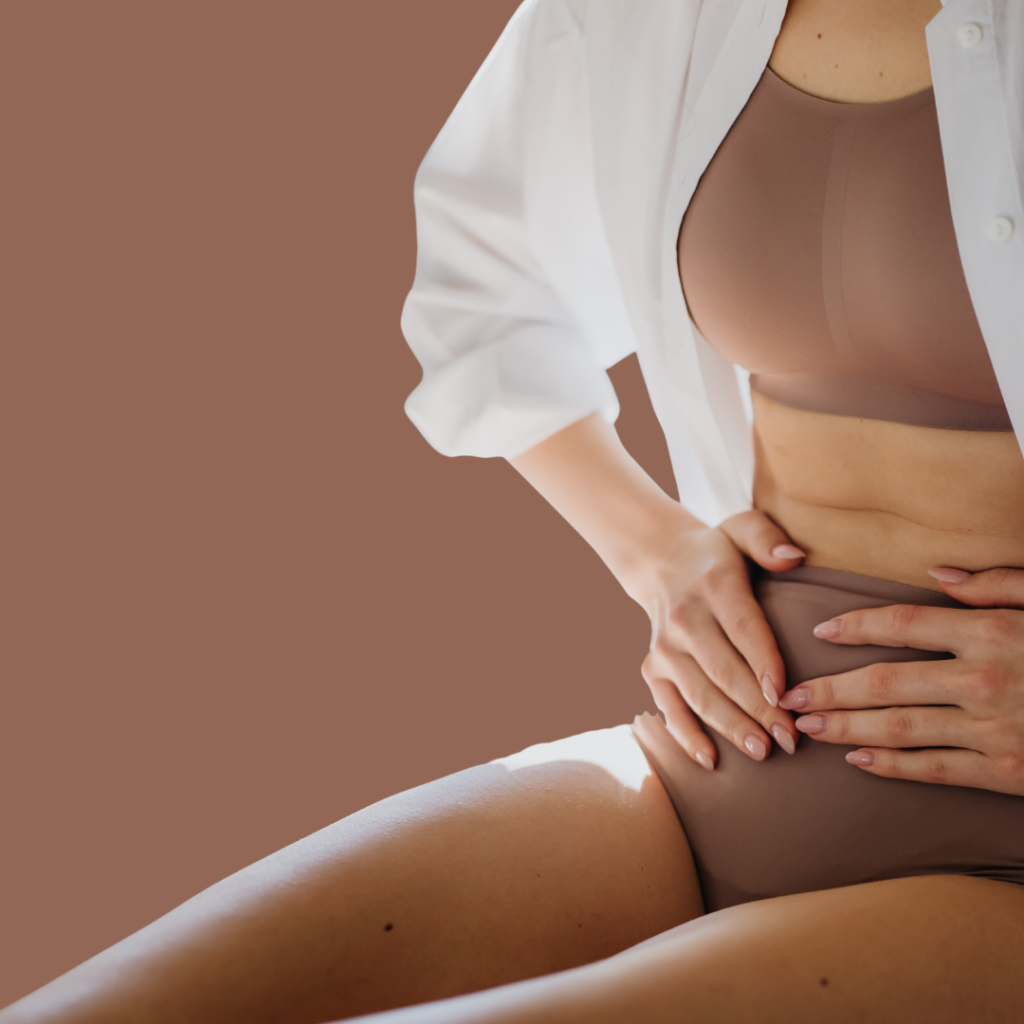
There are pains that do not begin in the body, but in the habit of silencing them. Vaginal discomfort, pain during intimacy, tension in the pelvic floor, or the feeling that the body no longer responds the same usually appear at a decisive stage for many women: perimenopause and menopause. What is at stake is not only sexual life. What is also at stake is the way a woman inhabits her body, recognizes its signals, and decides whether she accepts pain as destiny or understands it as a message that deserves to be addressed.
For years, many women have heard that at a certain age, one must resign oneself: that vaginal dryness is inevitable, that pain during sexual intercourse is resolved by relaxing or using a good lubricant, that the loss of intimate comfort is a natural part of aging. But that explanation is usually incomplete. Pain is not normal. Closing our stage as a woman is not normal. And although hormonal changes are real, there are also tools to regain well-being, comfort, and corporal confidence.
Nataly Burgos, a physical therapist specializing in the pelvic floor, explains that hormonal changes typical of perimenopause and menopause can also affect the pelvic musculature. Vaginal dryness is often one of the most visible signs, but it is not always the only one. “The muscle gradually begins to weaken as well, and that weakness can also bring a lot of tension,” Nataly points out. That tension can compromise the urinary part, sexuality, intimate comfort, and enjoyment with a partner or with oneself.
The pelvic floor is often mentioned as an area that needs to be strengthened. However, that recommendation, repeated without evaluation, can fall short. Our co-founder and CEO Ursula Pfeiffer emphasizes a central idea: people often talk about strengthening, but little is said about rigidity. The body doesn’t always need more contraction; sometimes it needs to regain elasticity. As with other muscles, the key is not only in strength, but in the ability to move, distend, and return to a state of equilibrium.
Nataly warns that many patients arrive thinking their muscle is flaccid or weak, when in reality they present maintained tension. That tension can appear due to stress, nerves, inflammation, previous infections, or as a protective response of the body. “The muscle does not need to be strengthened. It does not need to close more. It first needs to learn to relax,” she explains. The difference is important: working on the pelvic floor without knowing its state can be like insisting on squeezing a hand that has already been closed for too long.
The first step, then, is to know. Not from shame or distance, but from a more conscious relationship with one’s own body. Nataly insists that many women do not explore, look at, or touch themselves, and therefore do not always identify what is happening. “The first thing is to know yourself, know what is there, touch it, feel it,” she says. Recognizing the pelvic floor, knowing how it feels, perceiving if it is tense or relaxed, can open a simple and profound door. The body does not speak in abstract terms: it speaks through discomfort, changes, tensions, leaks, pain, or loss of pleasure.
Among the most frequent warning signs are small leaks of urine or gas, urgency to reach the bathroom, pain during sexual intercourse, inflammation after intimate contact, a feeling of a lump, pain when sitting for a long time, or discomfort during a gynecological exam. An opposite sensation can also appear: feeling the area too flaccid, foreign, or disconnected. All these signs deserve attention. They are not personal failures nor simple inevitable consequences of age.
One of the most important points of this conversation is to stop normalizing pain. Ursula recalls that many women learn from early on that pain is part of being a woman: menstrual cramps, childbirth, first sexual relations. That silent pedagogy ends up leaving a mark. But, as she clearly states, “pain is not normal.” It can have organic, muscular, or hormonal causes, but it should not be dismissed. In the case of the pelvic floor, pain can be a sign of tension, dryness, loss of flexibility, or lack of proper evaluation.
Intimate life is also affected. When there is pain, the anticipation of pain appears; when anticipation appears, desire can withdraw. Not due to a lack of love, nor a lack of connection, but because the body learns to protect itself. Ursula states it precisely: “What desire are we going to have if it hurts?”. In that sense, caring for the pelvic floor is not an isolated matter; it touches the relationship with pleasure, with bodily confidence, and with the possibility of continuing to live intimacy without fear.
Given this reality, practical knowledge becomes a form of care. This August 22nd, Yuriyana Club will offer the limited-capacity in-person workshop “Pelvic Floor, Menopause, and Intimate Comfort”, led by Nataly, a physical therapist specializing in the pelvic floor. The meeting is designed for women who want to understand what happens in the body during this stage, identify signs of tension or weakness, learn to connect breathing with muscular relaxation, and discover tools that can support the recovery of intimate comfort.
The proposal does not seek to expose anyone or force intimate conversations. It is conceived as an educational and safe space where each participant can receive clear information, ask questions, and take home resources applicable at home. Nataly summarizes the objective from a practical perspective: “We are going to learn to know what happens, what changes occur during this stage of a woman’s life, how your muscle will be or what to expect and, above all, how we can relax the pelvic floor.”
Among the tools that will be addressed are vaginal dilators and the Petite Pelvic Wand. Dilators fulfill a specific function: helping to flex the vaginal canal progressively. Nataly explains that when the muscle is tense, the diameter of the canal can be reduced. The goal is not to force, but to accompany the tissue and musculature to regain elasticity. “What it helps is to flex, it’s as if you were stretching it,” she explains about its use. When combined with breathing, heat, or vibration, they can favor the relaxation of musculature that has remained closed or on alert.
Vibration can also play a role within that process. According to Nataly, “constant continuous vibration emits vibration waves” that can lead the muscle to a state of relaxation. It is not an isolated solution or a quick promise, but a tool that, used with proper guidance, can help the woman recognize her body and work with it, not against it.
Perhaps one of the most necessary ideas is that menopause does not mark the end of bodily, intimate, or feminine life. It is just another stage, with specific needs and questions that deserve serious answers. Ursula expresses it forcefully: “Menopause is not death, it is not the end of life, it is not the end of being a woman.” If current life expectancy places menopause around the middle of many women’s lives, it makes no sense to accept that the second half be marked by pain, discomfort, or silence.
Nataly leaves a phrase that is worth holding onto with care: “You are not alone.” Not as easy consolation, but as a statement of fact. Many women go through these doubts in silence because there are not enough spaces to name them. Talking about the pelvic floor, female intimate comfort, vaginal dryness, and pain during sexual relations without frivolity or shame is also a way to expand the vocabulary of female well-being.
This August 22nd, the in-person workshop “Pelvic Floor, Menopause, and Intimate Comfort” opens a concrete opportunity to regain information, security, and resources. To receive all the information, you can write “MUJER” (WOMAN) via direct message to Yuriyana Club or contact us via WhatsApp at +51 924 763 419.
The question that remains open is not only what is happening to the body, but how willing we are to listen to it before it has to speak in the form of pain.
If you wish to see the companion video to this article, click here: https://youtu.be/Hyxfzhlst1s