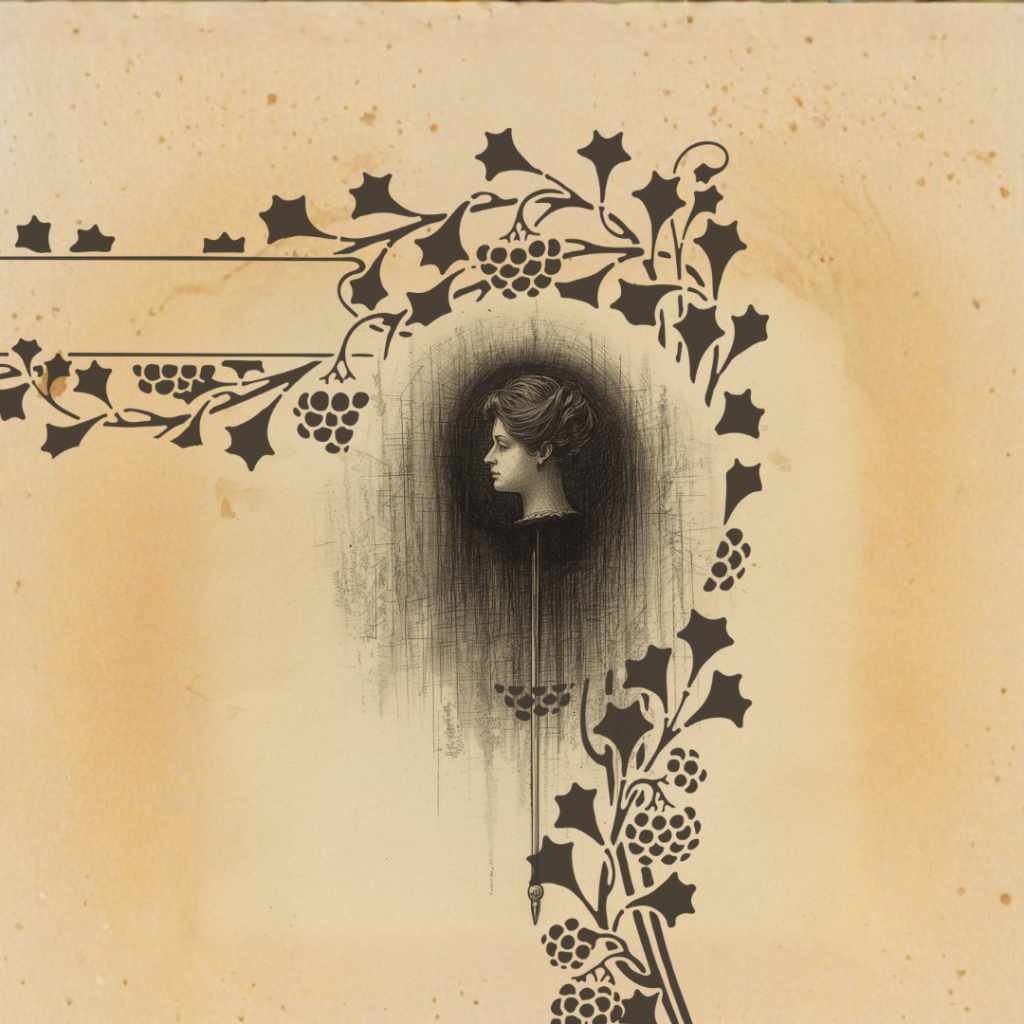
“Today’s woman constantly finds herself trapped in a non-ideal body, in an undesirable body that she must transform with products, medications, even with surgery.”
— Ursula Pfeiffer, co-founder of Yuriyana Club
There is a common characteristic to almost all female beauty standards of recent decades: they never stay still.
For a while we were told we should be extremely thin. Then curves arrived. Then voluminous lips. Later, slimmed faces. Then prominent buttocks. And now we are once again witnessing the return of a figure that seemed to have been left behind: extreme thinness.
Our co-founder Ursula Pfeiffer has called this phenomenon “the pin woman.” A figure marked by pronounced collarbones, visible ribs, prominent cheekbones, and an almost total absence of feminine curves. A body that has begun to dominate red carpets, social networks, and advertising campaigns, quickly becoming a new aspirational benchmark for millions of women.
However, before asking ourselves how we got here, perhaps we should ask an even more important question: why do feminine beauty ideals change so much?
History shows us that beauty standards never emerge in a vacuum. During the European Renaissance, for example, voluptuous female figures were celebrated as symbols of health, abundance, and prosperity. In a society that had suffered devastating epidemics and recurring periods of famine, a body with curves conveyed strength and well-being. Extreme thinness, by contrast, evoked illness and deprivation.
But something has changed.
Beauty ideals that once evolved slowly over generations today seem to modify every few years. And the most worrying thing is that the same woman must continually adapt to those changes.
“Today society seems to expect a single woman to embody all trends one after another,” notes Ursula. The result is a permanent sense of inadequacy. Our current body never seems to be the right one. There is always a new version that we should be pursuing.
The consequence is an entire industry built around that sense of inadequacy.
When a trend changes, new products appear.
New treatments.
New interventions.
New promises.
And, of course, new markets.
One of the clearest examples today are GLP-1 medications.
Originally developed to help patients with type 2 diabetes, these drugs became globally known due to a side effect particularly attractive to a weight-obsessed society: appetite reduction.
Subsequently, they began to be used for the treatment of obesity under medical supervision. But in a few years, they stopped being only a clinical tool to become a cultural phenomenon.
The conversation no longer revolves exclusively around diabetes or even obesity. Today it revolves around thinness.
And when that happens, it is inevitable to wonder who wins.
The market for GLP-1 medications has become one of the fastest-growing pharmaceutical segments in the world. Companies like Novo Nordisk and Eli Lilly project revenues in the tens of billions of dollars driven by a demand that extends far beyond the patients for whom these treatments were originally developed.
It is not about questioning the medical utility of these treatments for those who truly need them. There are patients for whom they represent a legitimate tool within a comprehensive health plan.
The question is another.
What happens when a medical solution begins to shape a cultural ideal?
What happens when the appearance associated with a medication becomes the new beauty standard?
And what happens to women who do not fit within that standard?
Model Ashley Graham recently expressed her concern about this trend, noting that the rise of these drugs represents a setback for many of the advances achieved by the body acceptance movement. Her observation is particularly relevant because it reminds us of something we often forget: female bodies do not come in a single form.
There are naturally thin women.
There are naturally curvy women.
There are genetic, metabolic, and structural differences that do not represent failures or defects, but human diversity.
However, every time a culture elevates a single body type to the level of absolute ideal, all other women come to be compared with it.
And that is where insecurity, dissatisfaction, and the constant feeling of not being enough appear.
“When we feel that we are fat, that we are ugly or simply inadequate, it’s worth asking ourselves: compared to what? With what standard am I comparing myself? Who dictates those standards?”
— Ursula Pfeiffer, co-founder of Yuriyana Club
The strength of that question lies in the fact that it forces us to stop.
Because many times we automatically accept the idea that something is wrong with our body without stopping to analyze where that judgment comes from.
Who decided that a certain size represents success?
Who decided that a face must have certain proportions?
Who decided that a healthy body must look like the images we see daily on social media?
And perhaps the most important question of all:
Who benefits from us feeling insufficient?
The answer is rarely us.
When we look closely, we discover that there is a whole economy built around female dissatisfaction.
The pharmaceutical industry.
The cosmetic industry.
The cosmetic surgery industry.
The supplement industry.
The fashion industry.
They all thrive when we believe there is something in our body that needs to be corrected.
That’s why perhaps one of Ursula’s most important reflections has nothing to do with medications or specific trends, but with the role our bodies have come to occupy within contemporary culture.
“Our female bodies have become contentious spaces where the medical, pharmaceutical, makeup, cosmetic surgery, and fashion industries constantly try to mold and standardize us.”
— Ursula Pfeiffer, co-founder of Yuriyana Club
The word contentious is especially precise.
Our bodies have become territories where multiple interests compete to define what it means to be attractive, desirable, successful, or feminine.
However, there is a fundamental difference between pursuing health and pursuing a trend.
Health seeks to strengthen our body.
Trends seek to transform it.
Health ensures our well-being.
Trends change constantly.
Health remains.
Therefore, before pursuing any new beauty ideal, it is worth asking the questions Ursula poses. Ask ourselves who defines the standards. Ask ourselves who benefits from them. And ask ourselves if what we pursue really responds to our health and well-being or simply to the needs of a market that will always need to sell us a new version of ourselves.
This search for well-being, self-knowledge, and autonomy is also part of Yuriyana Club’s mission: to accompany women so they can make informed decisions about their body, their health, and their life from their own values, not from changing standards imposed by others.
You can find the complementary video to this article here: https://youtu.be/EIm1G50zdnw