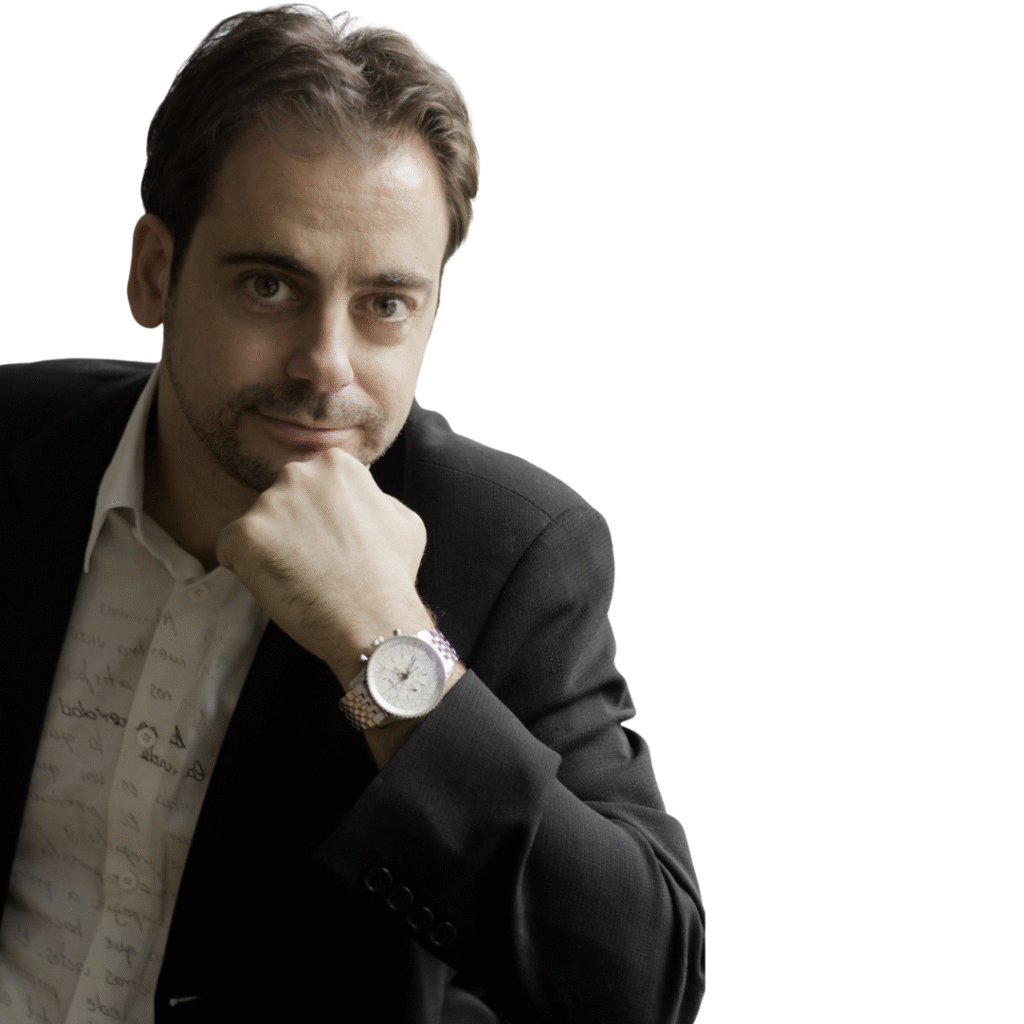
“Beauty is subjective,” says Sarah Bratchel, a Connecticut-based artist and educator whose work explores the profound — and often unspoken — ways beauty standards shape how women view themselves and their bodies.
But that subjectivity isn’t as simple as it sounds.
For Sarah, beauty is about a form of appreciation. About attention. About admiration. And, above all, about who is looking. Who is the observer? Who defines what deserves to be admired? Who sets the standard?
There is no simple answer. The word beauty can evoke lightness, art, images that lift us up. But it also has weight. It is polarizing. It is loaded with history.
As an artist, Sarah acknowledges having had an intense and conflicted relationship with aesthetics from a very young age. Creative people often look at the world through a different lens. However, that sensitivity has not protected her from the effects of dominant standards. For decades, she has actively worked on questioning and “decolonizing” the so-called white beauty standards that have defined desirability in much of Western culture.
The underlying question is not just what is beautiful, but who has the power to decide it.
When we look at art history — and then contemporary visual media — the representation of the female body has been disproportionately interpreted and produced by white men within specific hegemonic structures. This is not a minor detail. It means that the lens through which we learned to see ourselves was shaped by specific interests, values, and hierarchies.
And while standards change over time, the power that drives them usually remains concentrated.
Today we see transformations at the cultural epicenter. The rise of K-pop, manga aesthetics, and new Asian creative industries have partially displaced certain Western references. New models of beauty, new aspirations, and new faces are emerging. But the logic does not change: where there is economic and cultural power, a standard is installed.
What is unsettling is the speed with which we pursue those ideals.
Cosmetic surgery, invasive procedures, facial modification to approach specific features — sometimes even outside of one’s own ethnicity — reveal something deeper than an aesthetic preference. They reveal the social weight of the ideal. Beauty becomes a form of compliance. Of alignment with what grants social capital.
Because beauty is not just appearance. It is hierarchy.
Historically, standards have varied according to the center of power: Roman, Mediterranean, Egyptian, European, American. In Latin America, for example, even centuries after formal independence, associations between light skin and prestige persist. Colonial echoes remain present in the way we evaluate attractiveness.
None of this is absolute. Everything is relative to the cultural and economic context.
However, we live it as if it were a universal truth.
The impossibility of the ideal lies in its changing nature. When we believe we have reached it, it is redefined. What was admired yesterday is questioned today. What is celebrated today will be replaced tomorrow.
In this scenario, social media amplifies the pressure. They function within capitalist and consumerist logics. They monetize the image. They homogenize bodies. They multiply filters. Even when we try to curate our content, discourses on weight loss, medical procedures, or quick solutions that promise to bring us closer to an “improved” version of ourselves continue to appear.
The consequence is a distortion of perception.
Younger generations are exposed from an early age to highly edited ideals — sometimes even generated by artificial intelligence — that set an unattainable parameter. Body modification begins earlier and earlier. Emotional, economic, and energetic investment shifts toward appearance.
And even those who have done conscious work to question these standards recognize that the noise persists. Primary impulses — the need to belong, to be appreciated, to feel accepted — remain active.
Perhaps that is the core of the problem.
If beauty is so intimately linked to appreciation, then what we seek is not just to look a certain way. We seek to be seen. To be accepted. To be valued.
We have associated beauty with being celebrated. With being chosen. With being loved.
But when appreciation depends on an external standard that is constantly changing, the race never ends.
Perhaps the challenge is not to pursue an impossible ideal, but to revise the relationship we have built between beauty and validation. To ask ourselves through what lens we look at ourselves. To recognize what voices we inherited. And to decide, with awareness, which ones we want to keep.
You can watch the companion episode here: https://youtu.be/zDj-27ftGUE